Wearable Technology Integration Feeds Real-Time Heart Rate Data Into Poker Apps for Tilt Detection
Xander Meier · Jul 23, 2026
Wearable Technology Integration Feeds Real-Time Heart Rate Data Into Poker Apps for Tilt Detection
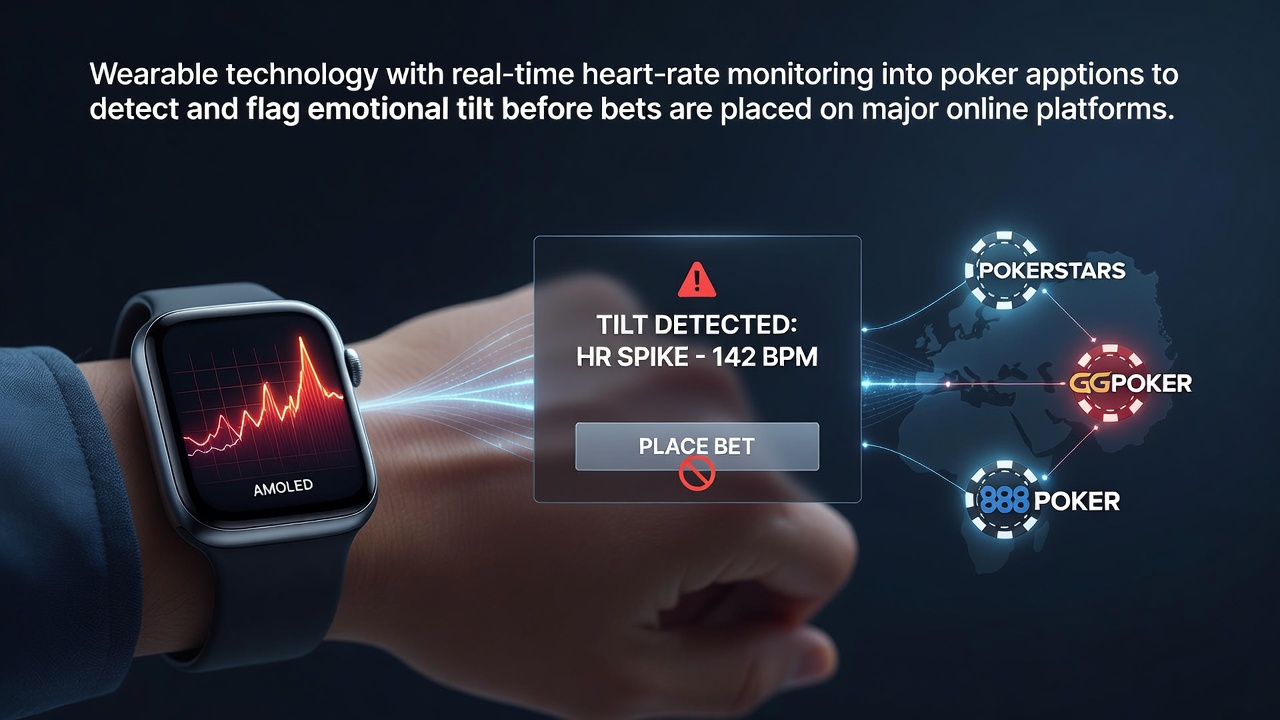
Platforms across major online poker networks began incorporating biometric feeds from consumer wearables in 2025, and by July 2026 several operators expanded those connections to process heart-rate streams before each betting decision. Devices from leading manufacturers transmit continuous cardiovascular metrics through secure APIs that poker applications access during active sessions, allowing algorithms to compare current readings against player-specific baselines established over prior hands.
Data Capture and Transmission Pathways
Smartwatches and fitness bands record pulse intervals at frequencies up to one hertz, then forward encrypted packets to paired mobile devices running the poker client. Applications on those devices apply lightweight filters to remove motion artifacts before forwarding the cleaned signal to cloud-based analytics engines maintained by the poker operator. Studies conducted at institutions such as the University of Nevada, Las Vegas documented average transmission latency under 800 milliseconds when users maintain stable Bluetooth connections, which enables processing to complete prior to the next action timer expiration.
Operators calibrate individual thresholds during an initial onboarding period that typically spans 50 to 100 hands. During this phase the system records resting heart-rate distributions alongside situational markers such as pot size and position, creating a personalized reference model that later deviations are measured against.
Algorithmic Tilt Identification Logic
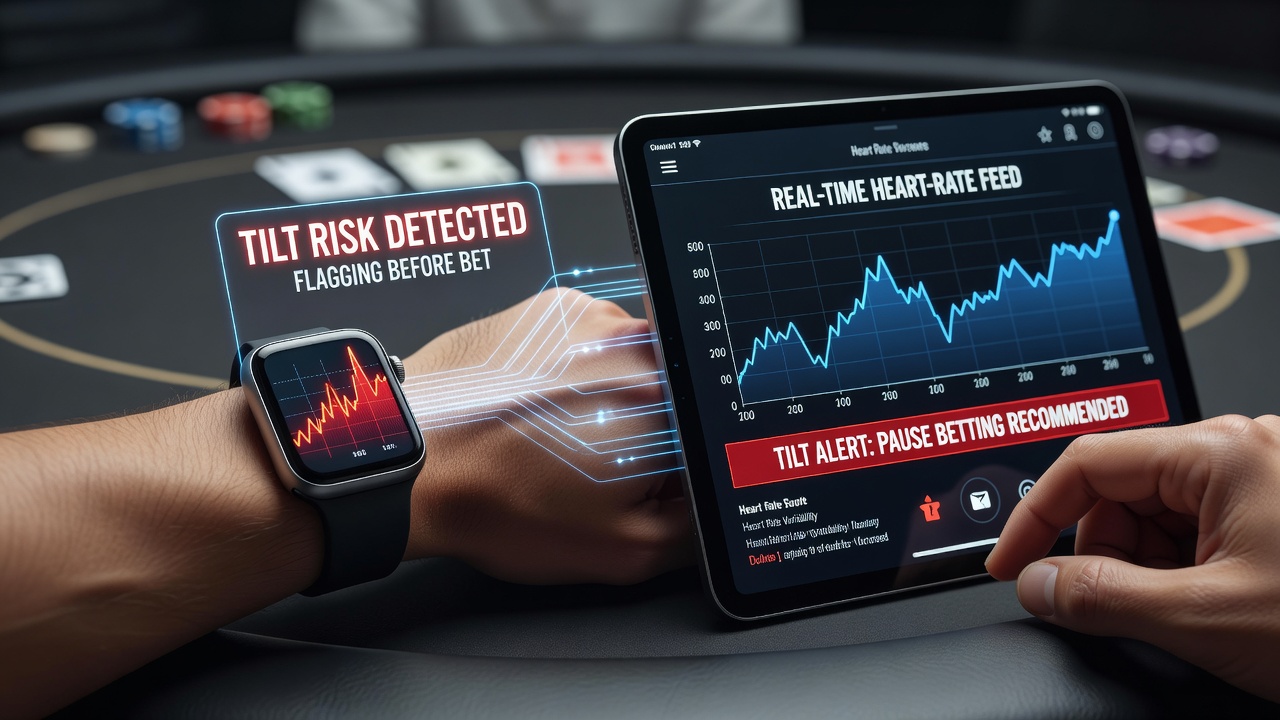
Once baseline models exist, the detection layer flags statistically significant elevations that exceed two standard deviations above the player’s established mean for comparable decision contexts. The system also tracks rate-of-change metrics, because sudden spikes within a single orbit often precede impulsive actions according to aggregated session logs shared by multiple platforms. When both absolute elevation and acceleration criteria are met, the application surfaces a non-intrusive overlay that displays a simple color indicator rather than interrupting gameplay flow.
Cross-site data synchronization occurs through anonymized token exchanges that respect regional privacy frameworks, allowing a player who switches between networks to carry forward an aggregated biometric profile without exposing raw cardiovascular records. European operators currently align these exchanges with guidelines from the European Data Protection Board, while North American sites follow state-level biometric statutes in jurisdictions that have enacted them.
Deployment Status Across Major Networks
By mid-2026 three of the five largest liquidity-sharing networks had activated voluntary tilt-alert modules for mobile users who opt in through account settings. Desktop clients receive the same processed alerts via companion mobile sessions running in the background, although direct wearable pairing on desktop remains limited to operating-system level Bluetooth stacks. Traffic analytics released by one North American operator showed that sessions employing the feature recorded a measurable reduction in post-spike betting volume during the subsequent three hands, though aggregate win-rate shifts have not yet appeared in public reports.
Implementation teams emphasize that alerts remain advisory; the software never blocks or delays a player’s action. Users retain full control to dismiss the indicator or adjust sensitivity sliders within the application preferences menu. Regulatory filings submitted to the New Jersey Division of Gaming Enforcement and the Alcohol and Gaming Commission of Ontario both describe the feature as a responsible-gaming tool rather than a gameplay modifier.
Technical Constraints and Future Refinements
Current limitations include battery drain on older wearable models during extended multi-table sessions and occasional signal dropouts when players move between rooms with differing wireless interference patterns. Developers continue to refine edge-computing routines that perform preliminary classification on the wearable itself, thereby reducing the volume of data transmitted and extending device uptime. Researchers at the University of Sydney’s gambling studies unit published preliminary findings in early 2026 indicating that combining heart-rate variability with micro-movement data from the same device improves classification precision by roughly 12 percent in controlled tests.
Additional sensor fusion with skin-conductance readings from next-generation wristbands is under laboratory evaluation, yet commercial rollout timelines remain undetermined pending further hardware certification. Platform operators continue to publish aggregated, anonymized performance metrics on a quarterly basis so that independent analysts can track longitudinal effectiveness across different player cohorts.
Conclusion
The integration of real-time heart-rate streams from wearables into poker applications represents a measurable evolution in session-monitoring capabilities that several major sites activated throughout 2025 and expanded in July 2026. Data pipelines now deliver processed biometric indicators to users before each betting window closes, while privacy-compliant synchronization methods allow profiles to travel across participating networks. Continued hardware and algorithmic refinements are expected to broaden accessibility and precision in subsequent software cycles.