How Interface Layout Variations Across Merged Poker Networks Influence Multi-Table Decision Speed and Error Rates
Nils Bauer · Aug 6, 2026
How Interface Layout Variations Across Merged Poker Networks Influence Multi-Table Decision Speed and Error Rates
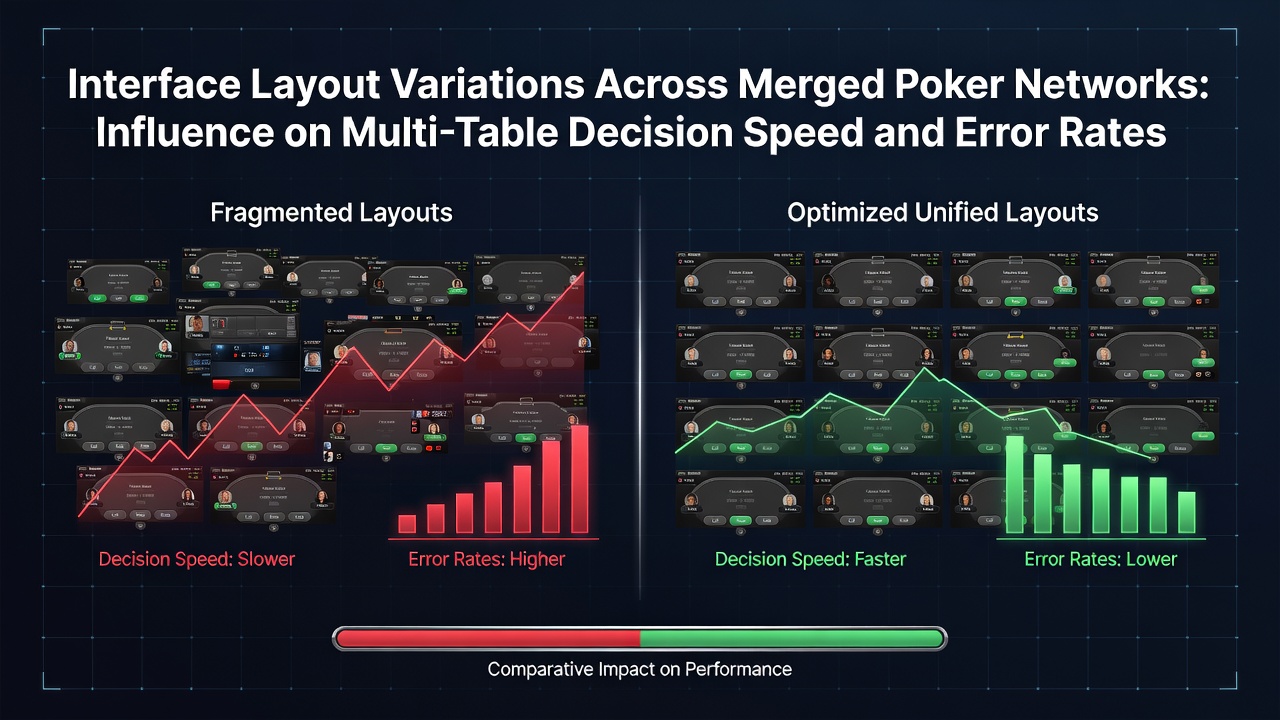
Online poker networks that merge player pools from multiple sites create shared liquidity while preserving distinct interface designs, and these layout differences shape how players handle multiple tables at once. Data from network operators in August 2026 shows that variations in button placement, information density, and visual hierarchy directly affect the time it takes to reach decisions and the frequency of misclicks during sessions with four or more tables open.
Researchers tracking user behavior across platforms note that networks using compact grid layouts allow quicker visual scanning than those with expansive card displays separated by larger margins, yet the same compact designs increase error rates when action buttons sit too close together. Observers tracking session logs report that players switching between networks with inconsistent control placements experience measurable slowdowns in pre-flop decision speed, particularly when color-coded fold and raise options shift positions between sessions.
Layout Elements That Drive Performance Differences
Button positioning stands out as the most consistent variable, with some merged environments clustering action controls along the bottom edge while others scatter them across the sides of the window. Studies from the International Gaming Institute at the University of Nevada indicate that fixed bottom-row configurations reduce average decision time by approximately 1.2 seconds per hand in multi-table scenarios, whereas scattered layouts extend that interval and raise the chance of selecting the wrong option during rapid play.
Information density also matters, since overlays that stack pot odds, stack sizes, and player statistics into narrow panels require less eye movement than designs that spread the same data across wider areas. Network analytics from the past year reveal that players on dense interfaces maintain higher table counts without corresponding rises in error frequency, although those same interfaces produce fatigue signals after extended periods when text size remains constant.
Cross-Network Player Adaptation Patterns
Players who regularly move between merged sites develop workarounds such as resizing windows or using external tracking software, but these adjustments only partially offset the cognitive load created by inconsistent layouts. Figures from session data collected across European and North American networks show that adaptation periods last between three and seven days before decision speeds stabilize, with error rates remaining elevated during the transition window.
One documented pattern involves players who favor networks with customizable hotkey support, which allows remapping of actions to consistent keyboard inputs regardless of on-screen button locations. Research published by Gambling Research Australia demonstrates that participants using hotkeys across varied interfaces cut their multi-table error rates nearly in half compared with mouse-only users facing the same layout shifts.

Impact on Error Rates and Session Outcomes
Error rates climb when networks merge and suddenly expose players to unfamiliar visual arrangements, especially when bet sizing sliders appear in new locations or confirmation prompts change their default behavior. Network operators report that misclick frequency spikes by up to 18 percent in the first 48 hours after a player pool merger introduces new interface options, then gradually declines as muscle memory adjusts.
Color contrast and highlight timing further influence accuracy, with some designs using bright, immediate feedback for pending actions while others rely on subtler cues that require closer attention. Data collected during peak traffic hours in August 2026 shows that interfaces with high-contrast action highlights maintain lower error rates even when players manage eight or more tables simultaneously.
Technical Factors Behind the Variations
Merged networks often retain legacy code from individual sites, resulting in patchwork interfaces that carry forward different rendering engines and scaling behaviors. These technical differences become noticeable when players open tables from multiple skins within the same network, because each skin may apply distinct font scaling or animation speeds that disrupt the rhythm of rapid decisions.
Developers who standardize core elements across skins while preserving brand-specific visual themes reduce the performance gap, according to internal metrics shared by several major operators. Players who test standardized versus non-standardized configurations consistently record faster average action times on the standardized versions without sacrificing the ability to distinguish between network skins.
Conclusion
Interface layout variations across merged poker networks create measurable differences in multi-table decision speed and error rates, driven primarily by button placement, information density, and visual feedback consistency. Network data and independent research confirm that players encounter adaptation costs during transitions, yet targeted adjustments such as hotkey support and standardized control locations can mitigate those costs. As mergers continue, the relationship between layout design and player performance remains a central factor in how effectively individuals manage multiple tables.