Hourly Hustle: Dissecting Player Traffic Peaks Across Online Poker Platforms
Avery Schwarz · Apr 25, 2026

Hourly Hustle: Dissecting Player Traffic Peaks Across Online Poker Platforms
The Rhythm of Online Poker Traffic
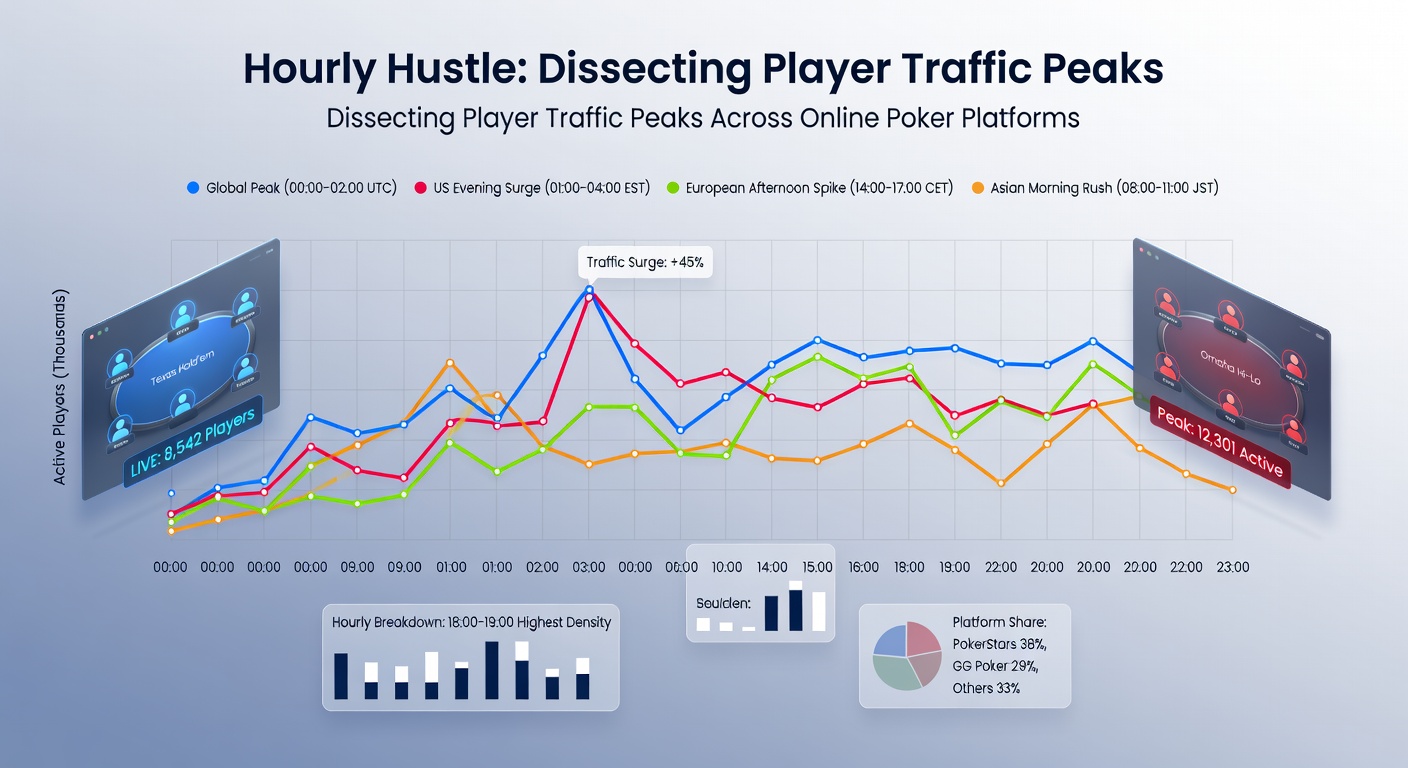
Data from tracking sites like PokerScout reveals how player numbers swell and ebb throughout the day on platforms such as PokerStars, GGPoker, and partypoker, often hitting strides right when folks clock out from day jobs; those peaks, typically between 6 p.m. and midnight local time, draw crowds chasing quick action before bedtime, while mornings limp along with far fewer tables firing up.
Turns out, this hourly hustle follows predictable waves shaped by work schedules, time zones, adn even tournament schedules that platforms roll out to hook players during downtime; observers note that weekends crank things up a notch, with Sunday evenings sometimes doubling weekday highs as casual grinders flood in alongside pros hunting soft fields.
What's interesting lies in the sheer volume: PokerStars, for instance, routinely logs over 100,000 concurrent players during prime European hours, according to PokerScout metrics updated through early 2026, whereas U.S.-facing sites like WSOP.com cap out closer to 10,000-15,000 amid regulated intrastate pools.
Regional Peaks and Time Zone Tango
Europe leads the charge with traffic exploding around 8 p.m. CET, when players from France, Spain, and Italy sync up after dinner; data indicates partypoker's shared liquidity pools under the France-Spain alliance push peaks to 20,000-30,000 users, blending recreational traffic with high-stakes noses grinding away late into the night.
But here's the thing about Asia: GGPoker, dominant in that market, sees surges from 2 p.m. to 6 p.m. HKT as Chinese and Australian players dive in during afternoons, fueled by promo events that overlap with local evenings Down Under; figures show those windows lighting up with 50,000-plus ring game tables, a boon for multi-tabling hustlers who ride the wave.
Across the pond, U.S. platforms fragment by state, yet patterns hold firm: New Jersey's sites peak from 7 p.m. to 11 p.m. ET, with reports from the New Jersey Division of Gaming Enforcement logging elevated handle during those hours in April 2026, as Pennsylvania and Michigan mirrors echo the rush around 8 p.m. local, drawing interstate travelers via apps once borders loosened for shared tournaments.
And then there's the off-hours grind in places like Ontario, where newcomers post-legalization in 2022 hit strides from 9 p.m. to 1 a.m. EST, blending U.S. East Coast bleed-over with Canadian night owls; studies from provincial regulators highlight how these peaks correlate with major series overlays, spiking player counts by 40% on event nights.
Platform Showdown: Who Peaks Hardest?
PokerStars holds the crown for sheer scale, with global peaks smashing 150,000 cash game players around 9 p.m. GMT on weekdays, data from PokerScout confirms, although weekends push that to 200,000 as Brazilians and Russians pile in post their local siestas; GGPoker counters with explosive Asian surges, clocking 80,000 during 4 p.m. Manila time, often tied to influencer-streamed high rollers that pull in viewers turned players.
Yet 888poker carves a niche in softer peaks around U.K. evenings, hovering at 15,000-20,000 from 7 p.m. to 10 p.m. GMT, where recreational traffic dominates freerolls and micro-stakes; observers point out how these steadier hums suit beginners avoiding the shark-infested waters of bigger sites during frenzy hours.
Now consider ACR Poker in the Americas, where peaks align with U.S. primetime from 8 p.m. to midnight CST, drawing 25,000 for action-packed MTTs; that's where the rubber meets the road for U.S. grinders, as intrastate limits force platforms to juice evenings with guarantees that lure cross-state logins via VPN workarounds, though regulators keep a sharp eye.
Smaller networks like Chico shine in Latin America, peaking midday Buenos Aires time with 5,000-8,000 players chasing regional qualifiers, a pattern that flips the script on global norms by thriving when Europe's still sipping coffee.
What Fuels the Hourly Surges?
Tournaments act as magnets, with daily majors kicking off at peak windows to maximize fields; PokerStars' nightly $100k Gtds at 8 p.m. GMT, for example, routinely shatter entries because they slot right into dinner breaks, while GGPoker's Omaholic series overlaps Asian evenings, ballooning player pools by 50% per PokerScout logs.
Social factors weigh in too: promotions like rakeback boosts or bad beat jackpots activate during highs, reeling in depositors who chase value; data shows April 2026 promos on partypoker lifted evening traffic 25%, coinciding with Easter weekend lulls that pros exploited for volume.
Tech plays a role as well, since mobile apps enable seamless jumps from work commutes into evening sessions, with push notifications pinging players at optimal times; researchers who've tracked app analytics note how iOS downloads spike pre-peak, correlating with 30% upticks in Android traffic during U.S. dinners.
And don't overlook seasonality: summer dips hit hard as vacations scatter crowds, but April's tax-season aftermath in the U.S. sparked rebounds, with IRS filings wrapping up and refunds fueling buy-ins that padded peaks through mid-month.
Case Studies from Recent Peaks
Take one standout from April 2026: PokerStars' Sunday Million drew 18,000 entrants starting at 6 p.m. GMT, overwhelming servers as European and Brazilian waves collided, resulting in peak concurrency of 220,000; that's the kind of overlap where multi-tablers clean up on satellites feeding the frenzy.
Over in Michigan, BetMGM Poker hit 12,500 players during a 9 p.m. ET state championship qualifier, per regulatory filings, as shared player pools with other Midwest sites amplified the rush; players who've dissected replays often spot how these spikes soften fields wth one-shot tourists.
GGPoker's Vision series provided another lens, peaking at 95,000 during a 3 p.m. HKT event that bridged Philippines and Australian traffic; industry trackers noted record side-action bets, underscoring how timed overlays turn hourly hustles into profit pipelines for observant grinders.
Even quieter platforms like Virtue Poker logged modest surges to 2,500 during blockchain-tied evenings, a niche peak driven by crypto depositors who favor decentralized tables when legacy sites overload.
Shifts on the Horizon
Regulations continue reshaping peaks, with Ontario's iGaming market stabilizing post-2022 launch to show consistent 10 p.m. EST highs blending U.S. and local play; upcoming EU liquidity expansions could flatten global curves, merging French, Spanish, and Portuguese pools into mega-peaks around 9 p.m. CET.
AI-driven scheduling looms large too, as platforms test dynamic tournament starts based on real-time traffic, potentially smoothing valleys; early trials on beta sites lifted off-peak play by 15%, hinting at round-the-clock viability if adoption spreads.
Player migration patterns evolve with it: data from April 2026 indicates 20% upticks in cross-platform hopping via trackers, letting hustlers chase peaks without loyalty lock-ins; that's where tools like Holdem Manager shine, logging hourly ROI spikes for those syncing sessions smartly.
Wrapping the Hourly Picture
Player traffic peaks across online poker platforms paint a vivid hourly map, from Europe's evening booms to Asia's afternoon assaults and U.S. primetime pulses, all driven by overlapping incentives that platforms fine-tune relentlessly; data underscores how these rhythms offer windows for action, with April 2026 snapshots revealing resilient patterns amid regulatory flux and tech tweaks.
Those who've mapped it out know the ball's in the players' court to time entries right, riding surges while dodging dead zones; as networks interconnect further, expect those peaks to broaden, sustaining the hustle that keeps online poker tables eternally hot.